

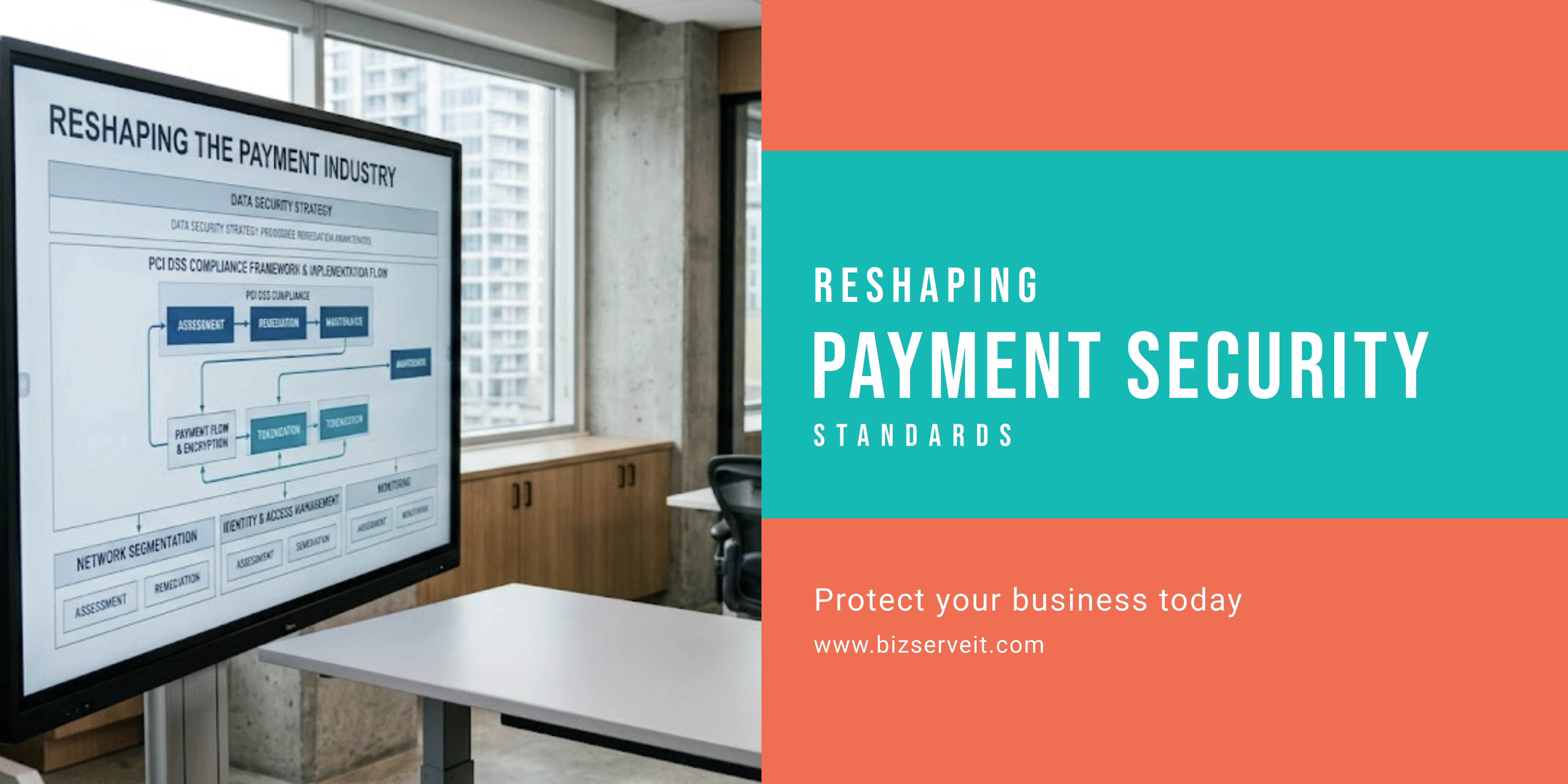
Digital payments have transformed the way businesses operate, making transactions faster, more convenient, and increasingly borderless. But as payment ecosystems become more connected through cloud platforms, mobile wallets, APIs, and third-party payment services, they also become more attractive targets for cybercriminals. A single security incident involving payment card data can result in financial losses, regulatory penalties, and lasting damage to customer trust.
In order to counter this problem, the Payment Card Industry Security Standards Council (PCI SSC) continues to evolve its security framework to help organizations strengthen their payment security posture. PCI DSS 4.0.1, released on June 11, 2024, has been the standard's current active version for more than two years now, refining the foundation established in version 4.0 and reinforcing a more proactive approach to protecting cardholder data. For organizations that store, process, or transmit payment card data, understanding the direction PCI DSS 4.0.1 has set is about more than meeting compliance obligations — it's about validating security controls at defined frequencies, assessing evolving risks, and adapting defenses as payment technologies change.
A Brief Understanding of PCI DSS 4.0.1
PCI DSS 4.0.1 is the latest revised active version of the Payment Card Industry Data Security Standard, developed by the PCI SSC to help organizations protect payment card data. It's a clarifying update, not a new set of requirements — version 4.0.1 refines the standard by improving clarity, correcting minor inconsistencies, and making implementation guidance easier for organizations and assessors to interpret consistently. What matters more than the technical changes themselves is the broader direction they reinforce: a shift away from a once-a-year, checklist-driven mindset toward security activities performed at defined, ongoing frequencies rather than continuously. PCI DSS doesn't require continuous audit — it requires periodic validation: quarterly vulnerability scans, quarterly access reviews, annual penetration testing, and daily log reviews, among others. Instead of assuming that systems remain secure after an annual assessment, organizations are expected to keep these periodic checks running throughout the year, not just in the lead-up to an audit.
Why Payment Security Standards Have Had to Evolve
The payment ecosystem has undergone a dramatic transformation over the past decade. Traditional payment environments were once relatively predictable — payment applications operated within clearly defined corporate networks, customer transactions were largely confined to physical point-of-sale systems, and sensitive payment data remained inside tightly controlled infrastructure. Today, that environment looks very different. Businesses now process transactions across cloud platforms, eCommerce websites, mobile applications, digital wallets, and third-party payment providers. Cybercriminals no longer just exploit network vulnerabilities — they target browser-based payment pages, compromise third-party software, exploit cloud misconfigurations, and steal user credentials, often bypassing traditional perimeter defenses altogether.
Payment environments have become more distributed and interconnected, so security controls must evolve alongside them. PCI DSS 4.0.1 reflects this reality by encouraging organizations to adopt a more adaptive approach to payment security, one that prioritizes regular monitoring at defined intervals, stronger authentication, ongoing risk assessments, and security controls that remain effective as technologies and threats evolve.
- Periodic security validation at defined frequencies over a once-a-year, audit-cycle mindset.
- Identity and access controls — MFA, least privilege, access reviews — carrying equal weight to the network perimeter.
- Payment pages and browser-based scripts under the same scrutiny as backend infrastructure.
- A flexible, risk-based approach over rigid, one-size-fits-all implementation.
- Payment security as a shared, business-wide responsibility — not just an IT obligation.
5 Ways PCI DSS 4.0.1 Shapes Payment Security Today
None of these five are entirely new concepts — most trace back to version 4.0. But they're the parts of the standard worth calling out for how they reshape day-to-day implementation, and that's not to take anything away from the importance of the rest of it.
Compliance Is Giving Way to Ongoing, Frequency-Based Security
A system that is fully compliant on the day of an audit could become vulnerable weeks later due to configuration changes, newly discovered software vulnerabilities, or evolving attack techniques. PCI DSS doesn't require continuous audit — instead, it requires organizations to keep up periodic checks at defined frequencies (such as quarterly vulnerability scans and access reviews, or annual penetration tests) rather than treating security as a point-in-time achievement.
Identity Has Become the New Security Perimeter
As payment environments expand across cloud platforms, remote workforces, and third-party services, the traditional network perimeter has become less relevant. Compromised credentials are often a more direct path to payment data than exploiting infrastructure itself — PCI DSS 4.0.1 reinforces stronger identity and access controls, including consistent MFA, least-privilege access, and regular access reviews.
The Browser Has Become the New Battleground
Not all payment attacks happen behind the scenes anymore. By injecting malicious scripts into payment pages, attackers can capture cardholder data without ever compromising an organization's internal systems. Organizations are now expected to know which scripts are running on checkout pages, verify they're authorized, and detect unauthorized changes before they put customer data at risk.
Flexibility Is Replacing One-Size-Fits-All Compliance
A cloud-native fintech, a global retailer, and a traditional financial institution won't secure their systems in exactly the same way. PCI DSS 4.0.1 supports a more flexible, risk-based approach — organizations can adopt alternative security controls, provided they demonstrate those controls achieve the same security objective.
Payment Security Is Becoming a Business-Wide Responsibility
Developers influence the security of payment applications, infrastructure teams manage the systems that process transactions, compliance teams oversee governance, and business leaders determine priorities and risk tolerance. A weakness in any one of these areas can affect the security of the entire payment environment.
Security investment concentrated on the corporate network perimeter. If servers, databases, and networks were secured, customer payment data was assumed to be safe.
Every user, device, and privileged account accessing the Cardholder Data Environment must be verified — because compromised credentials are now often a more direct path to payment data than infrastructure itself.
- Treating PCI DSS as a once-a-year audit exercise rather than an ongoing security practice.
- Assuming that securing servers, databases, and networks is enough, while payment pages and third-party scripts go unmonitored.
- Leaving identity and access controls — MFA, least privilege, access reviews — inconsistent across cloud, remote, and third-party access points.
- Treating payment security as solely an IT or security-team responsibility, rather than a shared responsibility across development, infrastructure, compliance, and leadership.
- Underestimating the effort required for legacy systems and complex third-party ecosystems to align with a more flexible, risk-based approach.
Staying Aligned With PCI DSS 4.0.1
PCI DSS 4.0.1 was never a dramatic overhaul of the standard, and that's precisely what makes its direction easy to overlook. Rather than a new set of requirements, it reinforces a shift that has been unfolding across the cybersecurity industry for years: effective security isn't measured by passing an audit, but by how well an organization can adapt to change.
- Shift from a once-a-year audit mindset to periodic validation and monitoring of controls at defined frequencies.
- Strengthen identity and access controls — MFA, least privilege, and regular access reviews — across the Cardholder Data Environment.
- Inventory and authorize scripts running on payment and checkout pages, and monitor for unauthorized changes.
- Evaluate where a flexible, risk-based approach can replace rigid, one-size-fits-all controls in cloud-native or hybrid environments.
- Embed payment security into everyday operations across development, infrastructure, compliance, and leadership — not just the security team.
This Rewards Organizations That Keep Paying Attention
For businesses, this means looking beyond compliance as the finish line. Payment environments are becoming more distributed, attack techniques are evolving faster, and customer expectations around data protection continue to rise. Organizations that embed regular, frequency-based monitoring, stronger identity controls, secure development practices, and risk-based decision-making into their operations will be better equipped to respond to these challenges, not just during an assessment, but throughout the year. That transition won't always be straightforward — legacy systems, complex third-party ecosystems, and limited security resources can all make implementation more demanding.
However, organizations that approach PCI DSS 4.0.1 as an opportunity to strengthen their overall security posture, rather than simply satisfy compliance obligations, will gain far more than regulatory confidence. They'll build greater operational resilience, reduce the likelihood of costly data breaches, and strengthen the trust customers place in their brand. Payment security is no longer a periodic compliance exercise or the sole responsibility of the IT team — it's an ongoing business commitment that requires the right balance of people, processes, and technology.


